
Overview
If you’ve noticed the bracketed users displayed on the Participant Window and wondered what they represent, this Tech Tip explains the mystery! These users are Placeholders.
A Placeholder can be defined and assigned to a role to represent the person that will eventually hold the role.
Three common reasons to use Placeholders include the ability to:
- Assign Placeholders to roles prior to the solution being fully deployed. If the actual person were assigned to the role instead, he/she would have access to the work items potentially before data is fully loaded or before the PMO team is ready for the solution to be live.
- Assign a Placeholder when an organization has an open headcount that it is planning to fill. The Placeholder represents the anticipated new hire and can be replaced with the actual user when the new hire is on-boarded.
- Assign a Placeholder when the person who will fill the role will hold a role on a large number of work items. By first assigning the Placeholder to the roles and then replacing the Placeholder on the highest level work item with the actual user (which then ripples the user assignment to all descendant work items), all Role Assignment notifications will be batched together. That is, the user will get one email notifying them of the roles to which he or she has been assigned rather than receiving an individual role notification email for each work item.
How to Use Placeholders
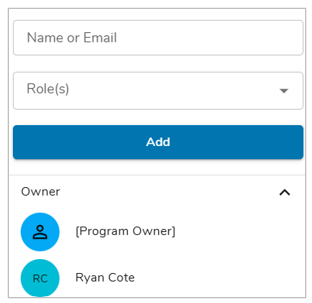
Until the Placeholder is filled, it will be displayed on the Participant Window with brackets around the name.
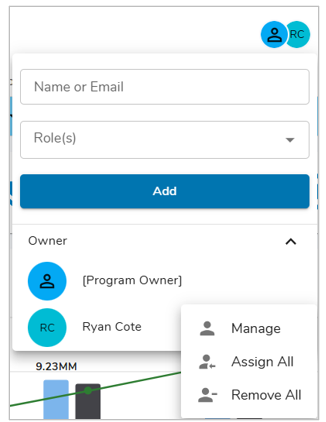
To fill the Placeholder, click on it and select Assign All from the floating menu.
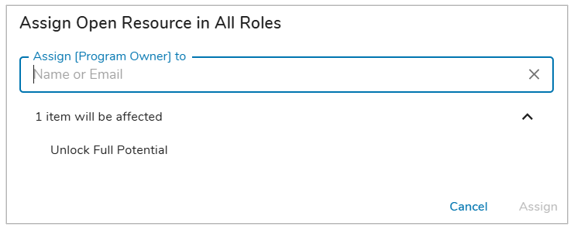
Type the name (or email address, if a new user) of the person to fill the Placeholder role and click Assign. The user will be assigned to the current and any descendant work items that also reference the named Placeholder.
For more information on Placeholders, see the Roles & User Management support site article.